
Rubidium-87, or Rb-87, is one of only two naturally occurring isotopes of rubidium and by far the more scientifically important of the pair. It sits at the centre of three very different fields at once: precision timekeeping, quantum physics and geological dating. Few isotopes carry that combination.
Natural rubidium is roughly 72% Rb-85 and 28% Rb-87. For applications that depend on the specific nuclear and hyperfine properties of Rb-87, that natural mixture is a problem rather than a starting point, and isotopically enriched material is required.
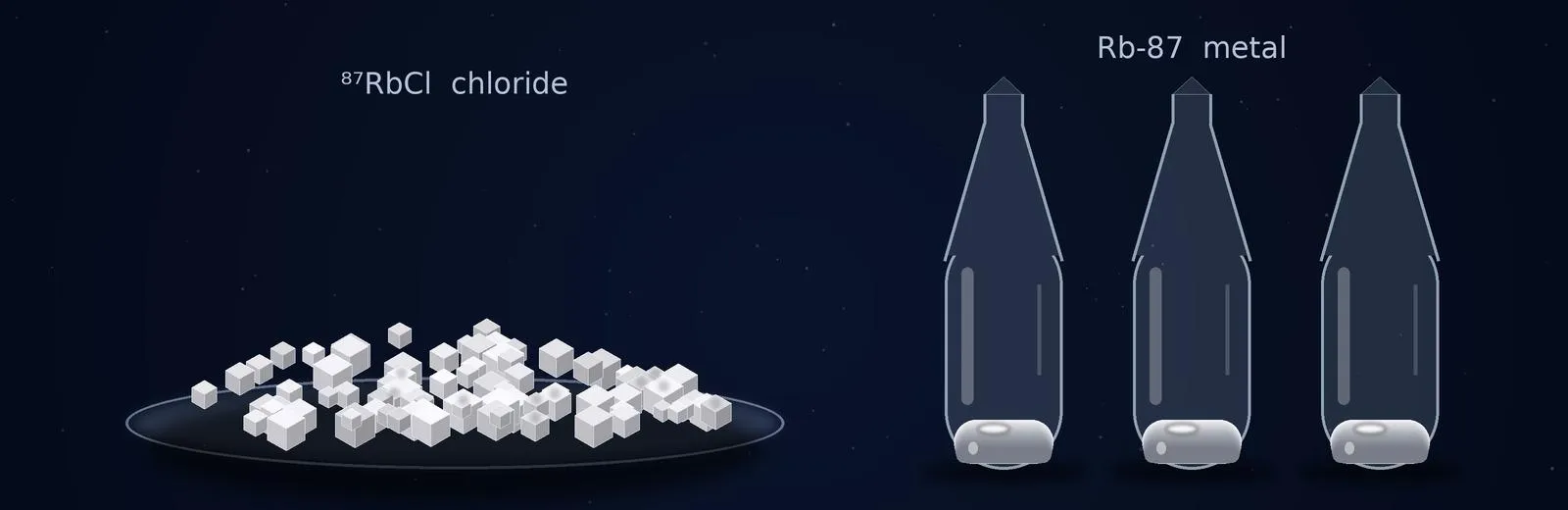
Enriched Rb-87 is supplied in two main forms. Rubidium-87 chloride (⁸⁷RbCl) is a stable, water-soluble salt that is easy to weigh, ship and dissolve. Rubidium-87 metal is the form loaded directly into vapour cells, lamps and atomic sources. The chloride is also the usual precursor from which enriched metal is produced.
Key Properties of Rubidium-87
| Property | Value |
|---|---|
| Isotope symbol | ⁸⁷Rb |
| Atomic number | 37 |
| Neutrons | 50 |
| Atomic mass | 86.909 Da |
| Natural abundance | ~27.83% |
| Stability | Long-lived, effectively stable (half-life ~4.97 × 10¹⁰ years) |
| Decay mode | Beta decay to Sr-87 |
| Supply forms | Enriched chloride (⁸⁷RbCl) and enriched metal |
| Typical enrichment level | 98.4% (metal) · ≥98.5% (chloride) |
| Property | Rb-87 Chloride (⁸⁷RbCl) | Rb-87 Metal |
|---|---|---|
| Appearance | White crystalline solid | Silvery white soft metal |
| Molar mass | ~122.36 g/mol | 86.909 g/mol |
| Melting point | ~718 °C | ~39 °C |
| Solubility | Highly soluble in water and dilute acid | Reacts violently with water |
| Air stability | Stable, mildly hygroscopic | Ignites spontaneously in air |
| Packaging | Sealed vial, dry storage | Sealed glass ampoule under argon or vacuum |
| Transport | Not classified as dangerous goods | UN1423, Class 4.3 (dangerous when wet) |
A note on stability. Rb-87 is technically radioactive, decaying by beta emission to Strontium-87, but its half-life of roughly 49.7 billion years is more than three times the age of the universe. For every practical laboratory and industrial purpose the material behaves as a stable isotope. That extraordinarily slow decay is not a limitation. It is precisely what makes Rb-87 the basis of one of geology’s most trusted dating methods.
Atomic Clocks and Frequency Standards
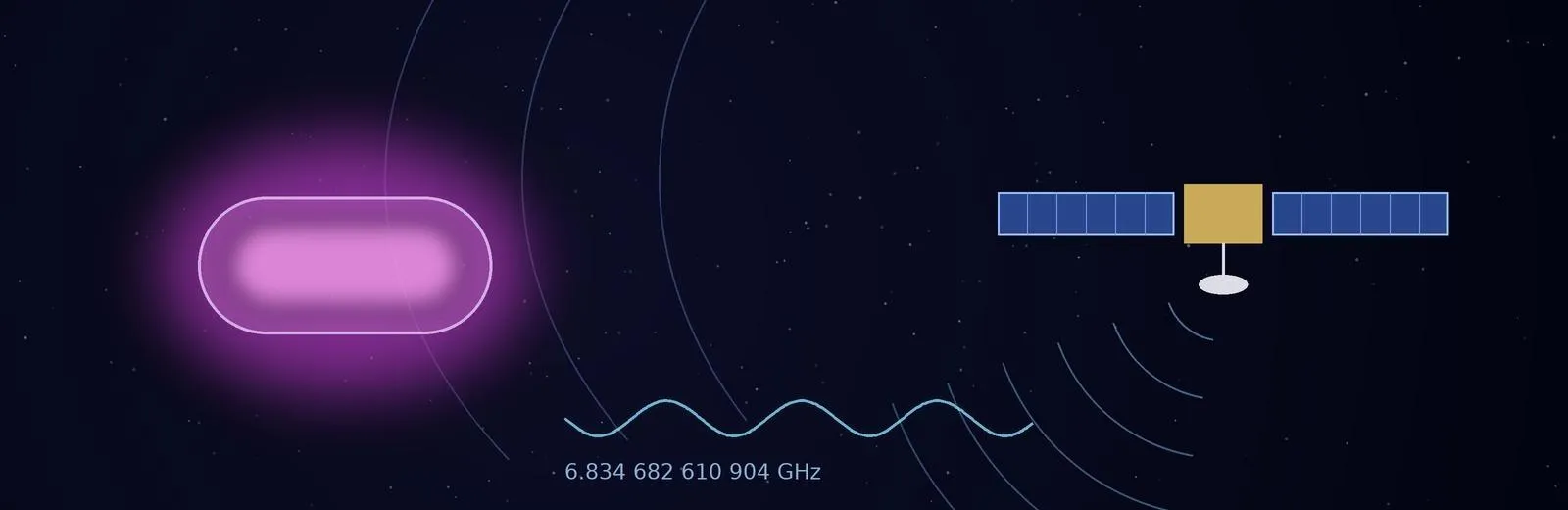
The best known application of Rb-87 is the rubidium frequency standard. The hyperfine transition in the ground state of Rb-87 occurs at approximately 6.835 GHz, and this transition is stable, reproducible and can be interrogated optically with modest equipment.
Rubidium clocks are far smaller, cheaper and more rugged than caesium standards, which is why they dominate applications where a physically large clock is not an option:
- Timing references in GPS and other satellite navigation payloads
- Synchronisation of telecommunications and mobile network infrastructure
- Frequency references in test and measurement instrumentation
- Holdover timing in power grid and financial trading systems
Clock manufacturers fill their resonance cells and lamps with enriched Rb-87 metal, because the vapour inside the cell must come from the metallic form. Isotopic purity matters: uncontrolled Rb-85 in the resonance cell adds its own hyperfine structure and optical absorption, degrading the signal-to-noise ratio of the Rb-87 transition. In classic lamp-pumped designs, a separate filter cell of enriched Rb-85 is used deliberately to shape the pumping light, so many clock builders source both enriched isotopes.
Laser Cooling, BEC and Quantum Technologies
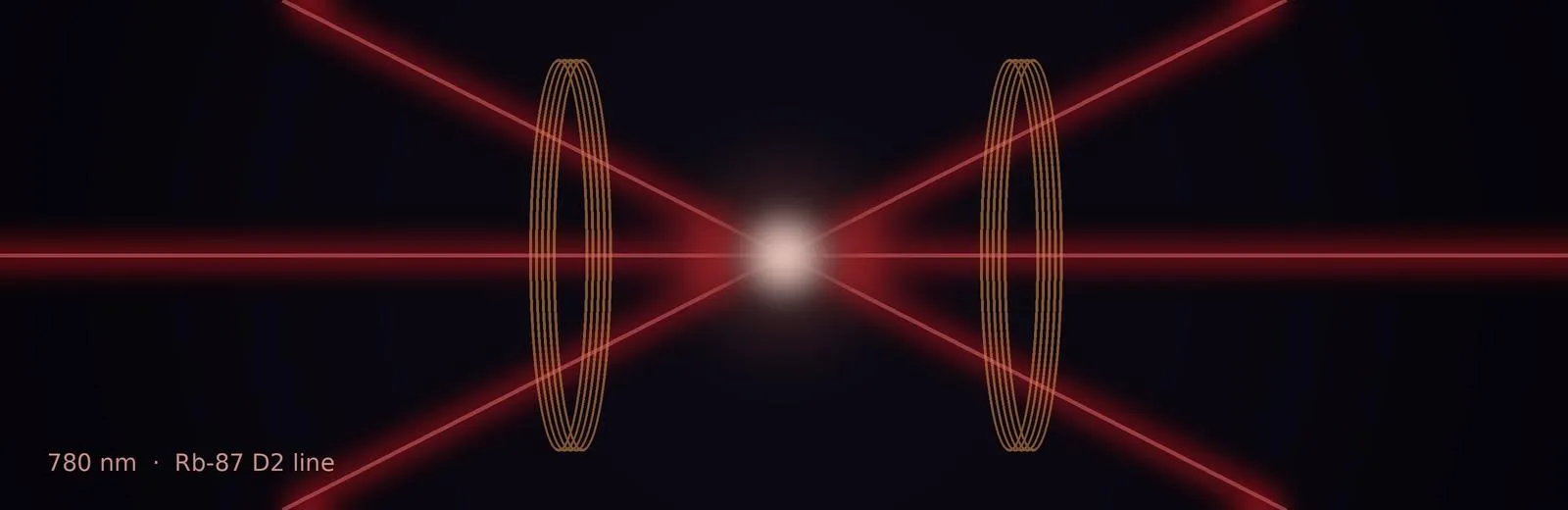
Rb-87 is the workhorse isotope of cold-atom physics. Its optical transitions fall at wavelengths accessible to inexpensive diode lasers, and its collisional properties are unusually favourable for evaporative cooling. The first Bose-Einstein condensate ever produced, in 1995, was made from Rb-87.
Three decades later the isotope remains central to:
- Atom interferometry, used for gravimeters, gradiometers and inertial sensors that need no external reference
- Quantum computing research, where neutral Rb-87 atoms held in optical tweezer arrays serve as qubits
- Quantum simulation, using ultracold Rb-87 in optical lattices to model condensed matter systems
- Precision magnetometry, where rubidium vapour magnetometers reach sensitivities relevant to biomagnetic imaging and geophysical survey
In all of these systems the atoms come from Rb-87 metal, loaded into an ampoule-fed oven or an alkali dispenser and heated to produce vapour.
Rubidium vapour is also the optical pumping agent in spin-exchange optical pumping, the technique used to hyperpolarise noble gases such as Helium-3 (He-3) and Xenon-129 for magnetic resonance imaging and neutron spin filters.
Quantum Computing with Rb-87
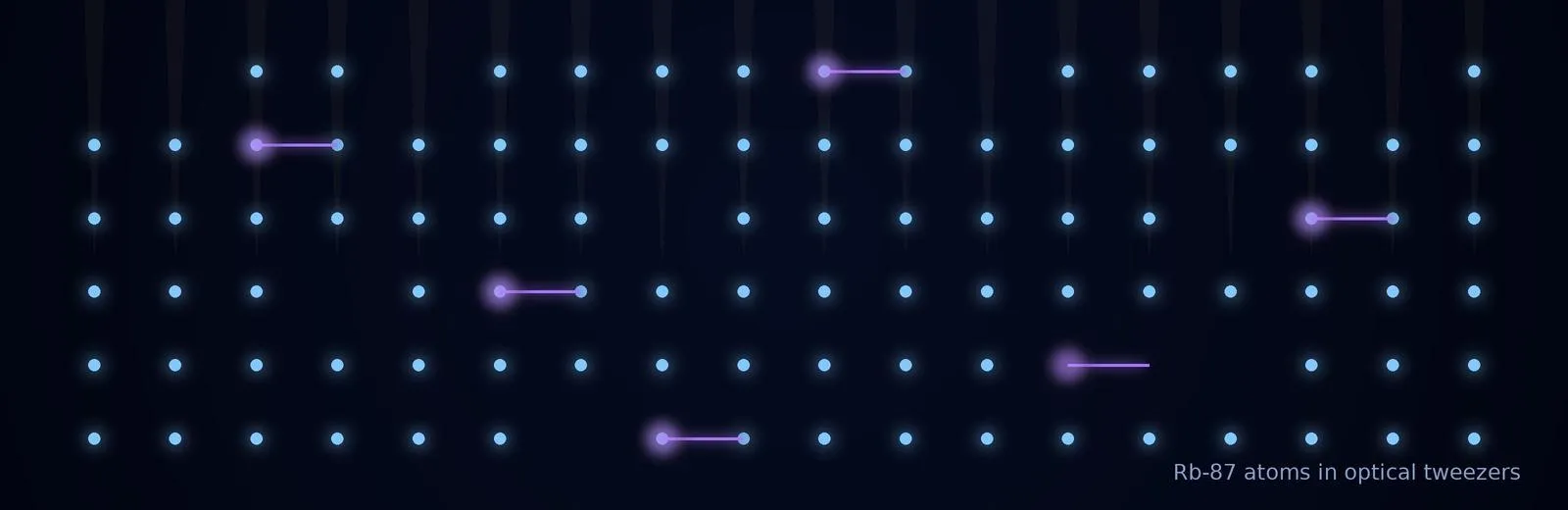
Neutral-atom quantum computing has become one of the leading routes to a fault-tolerant quantum computer, and Rb-87 is its main qubit atom. Most of the companies in the field, including QuEra (Boston), Pasqal (Paris) and Infleqtion (Boulder), build their processors on Rb-87.
How an Rb-87 quantum processor works:
- Individual Rb-87 atoms are held in arrays of tightly focused laser beams (optical tweezers) inside an ultra-high vacuum chamber.
- Each atom stores a qubit in its two hyperfine ground states, the same 6.835 GHz transition used in rubidium clocks.
- Two-qubit gates are made by briefly exciting atoms to high-energy Rydberg states, where neighbouring atoms interact strongly.
- Cooling and trapping lasers operate near 780 nm, the D2 line of Rb-87, served by mature and affordable diode laser technology.
Why the industry chose Rb-87:
- Identical qubits. Every Rb-87 atom is physically identical, so there is none of the chip-to-chip variability of fabricated qubits.
- No dilution refrigerator. The atoms are cooled by laser, not by millikelvin cryogenics.
- Scalability. Atom arrays can be rearranged in real time, and systems already run to hundreds of physical qubits.
The technology has moved from the lab into deployment. Pasqal delivered a 140+ qubit Rb-87 system to the CINECA supercomputing centre in Bologna in February 2026, QuEra operates the 256-atom Aquila on Amazon Braket and the 260-qubit gate-based Gemini, and QuEra plans its first fully fault-tolerant machine for 2028.
Every one of these machines is loaded from Rb-87 metal, through an ampoule-fed oven or an alkali dispenser. Enriched material raises the useful Rb-87 flux from each source and reduces background rubidium in the vacuum system. As the number of installed systems and research testbeds grows, so does recurring demand for high-purity enriched Rb-87 metal in breakseal ampoules.
Other Applications of Rb-87
Quantum Navigation and Gravimetry
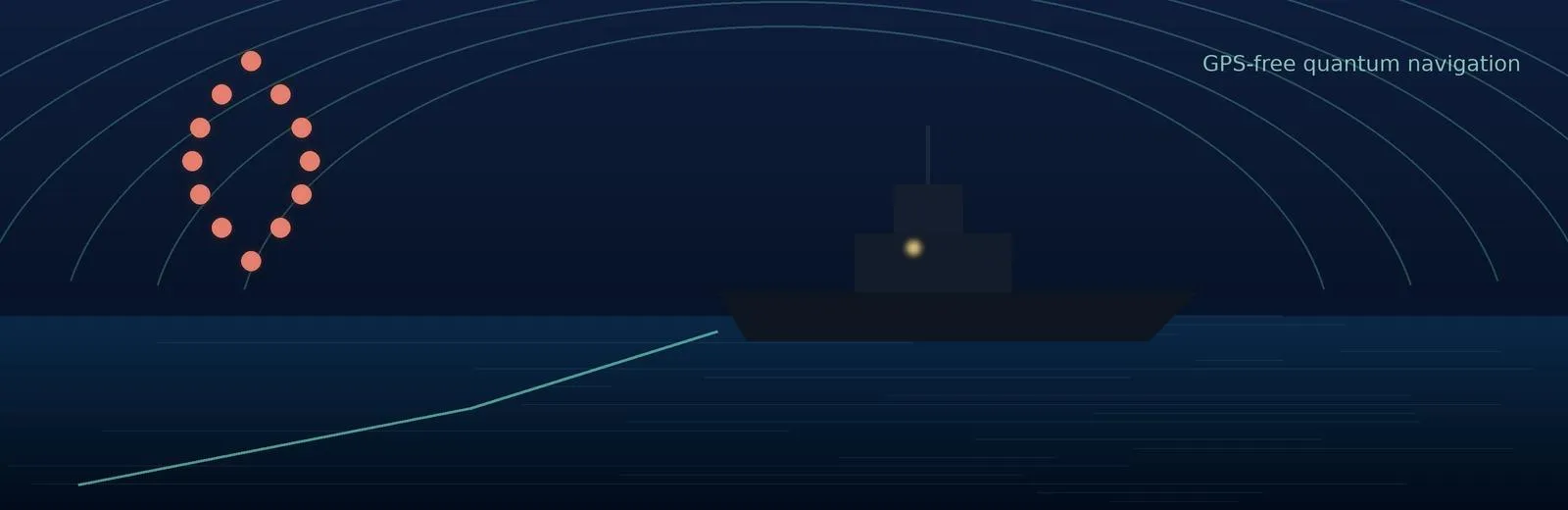
Atom interferometers built on laser-cooled Rb-87 measure acceleration, rotation and gravity with an accuracy that conventional accelerometers cannot match, and they drift far less. This makes them the core of GPS-free navigation for ships, aircraft and submarines. In March 2026 Q-CTRL navigated an 83 km route at sea in the Coral Sea using an Rb-87 quantum gravimeter matched against gravity maps, with satellite positioning excluded. In the UK, the HARLEQUIN system has completed marine trials of an Rb-87 quantum accelerometer. The same instruments serve mineral exploration, geophysical survey and civil engineering.
Rydberg RF Receivers
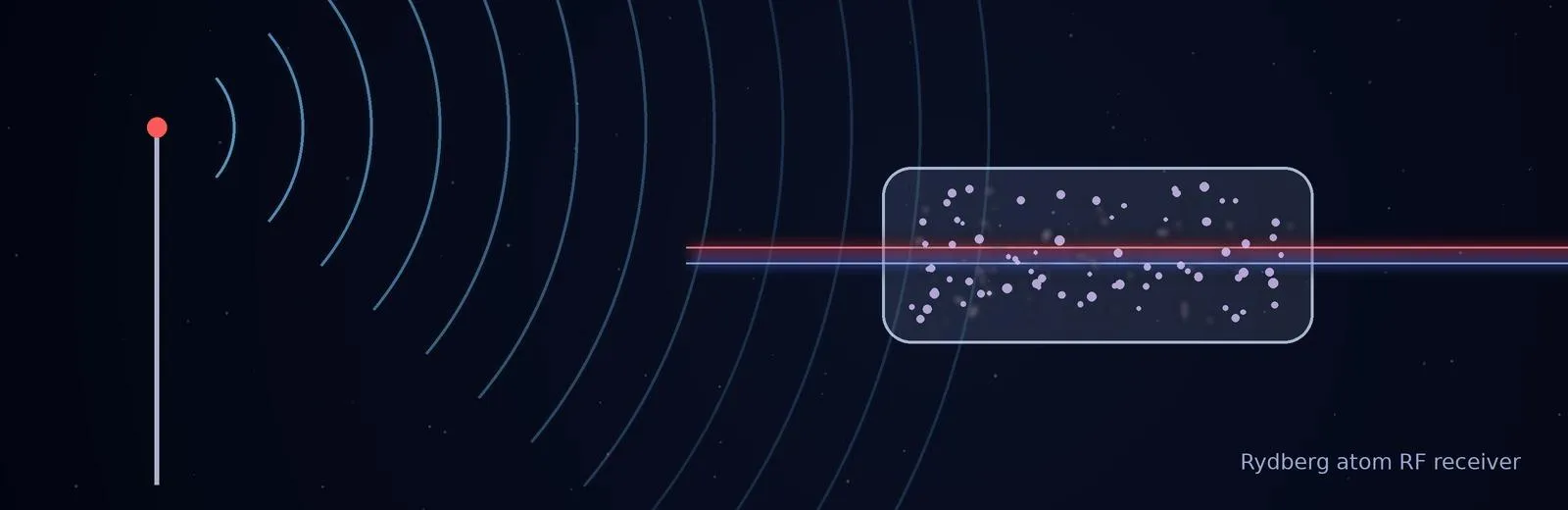
Rubidium vapour cells, with atoms excited to Rydberg states, act as antennas that detect radio signals from the MHz range to the THz range. These atomic receivers are self-calibrated, very small and broadband, and are being developed for telecommunications, radar, electronic warfare and SI-traceable RF metrology. Rb-87 is one of the standard working atoms.
Quantum Memory and Quantum Networks
Ensembles and single atoms of Rb-87 can store and release single photons on demand. This makes Rb-87 a leading platform for quantum memories and quantum repeaters, the building blocks of long-distance quantum communication and quantum internet testbeds.
Compact Optical Clocks
A two-photon transition in rubidium vapour at 778 nm is the basis of compact optical frequency references. These deliver far better stability than microwave rubidium clocks in a portable package, and are being developed for next-generation positioning, navigation and timing.
Fundamental Physics
Rb-87 is used in precision measurements of fundamental constants, including the fine-structure constant, and in tests of the equivalence principle that compare the free fall of Rb-87 and Rb-85 atoms. These experiments need both isotopes in enriched form.
Rb-Sr Geochronology
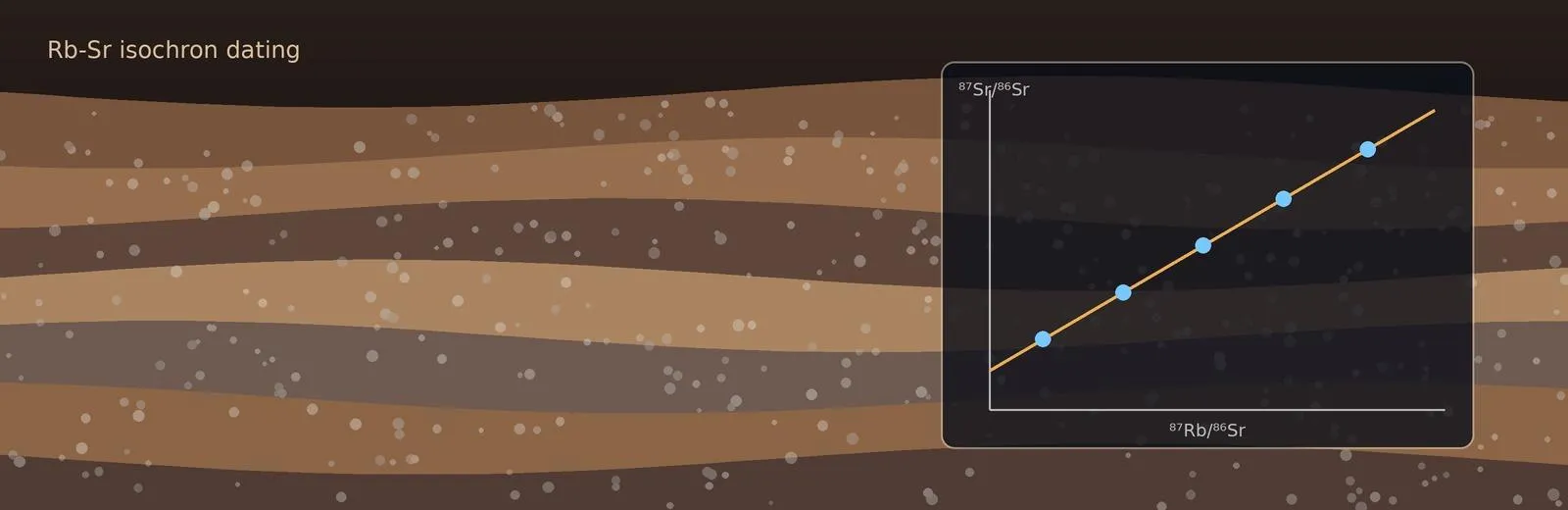
The slow beta decay of Rb-87 to Sr-87 underpins the rubidium-strontium dating method, one of the foundational techniques of isotope geology. Because the half-life is so long, the method is well suited to dating events on the scale of hundreds of millions to billions of years: the formation of ancient crustal rocks, meteorites and lunar samples.
Enriched Rb-87 has a specific role here that is distinct from the natural isotope. In isotope dilution mass spectrometry, a precisely calibrated spike of enriched material is added to the sample in a known quantity, allowing the analyst to determine rubidium concentration with an accuracy that external calibration cannot match. Rb-87 chloride is the preferred form for spike preparation: it weighs accurately, does not react with air, and dissolves cleanly in water or dilute acid to give a stable stock solution.
The same isotope dilution principle applies across the field, which is why laboratories running geochemical and cosmochemical work typically source a family of enriched spikes with certified isotopic composition.
Chloride or Metal: Choosing the Right Form
Rubidium metal ignites on contact with air and reacts violently with water. Where the application needs rubidium vapour, however, the metal is the correct and only practical choice.
Choose Rb-87 metal when the material will be:
- Filled into vapour cells and lamps for atomic clocks and magnetometers
- Loaded into ovens or dispensers for laser cooling, BEC and quantum computing experiments
- Used as the optical pumping medium in spin-exchange optical pumping
Choose Rb-87 chloride when the material will be:
- Dissolved to prepare isotope dilution spikes or standard solutions
- Converted to another rubidium compound or reduced to metal in-house
- Shipped and stored without the hazard classification of an alkali metal
- Weighed out in small, precise quantities on an open balance
Rb-87 metal is shipped in sealed glass ampoules under argon or vacuum and must be opened and handled under inert atmosphere. Rb-87 chloride only needs to be kept dry and tightly closed. Full handling guidance is set out in the Rb-87 safety data sheet.
Why Enrichment Level Matters
Natural rubidium contains under 28% Rb-87. At that level the Rb-85 fraction is not a trace contaminant but the majority of the material, and it interferes directly in every application above: it broadens and complicates the optical spectrum in clock and cold-atom work, and it distorts the isotope ratio measurement in geochronology.
This is why laboratories specify enrichment of 98% or higher, with a full isotopic certificate stating the measured abundance of both rubidium isotopes. It is the same standard applied to Iron-57 (Fe-57) for Mössbauer spectroscopy and to Molybdenum-100 (Mo-100) for medical radioisotope production, where the enrichment level of the input material sets a hard ceiling on the quality of the result.
For a comparison of both rubidium isotopes and their respective uses, see our overview of Rb-87 and Rb-85 properties and applications.
Sourcing Rubidium-87 from AMT
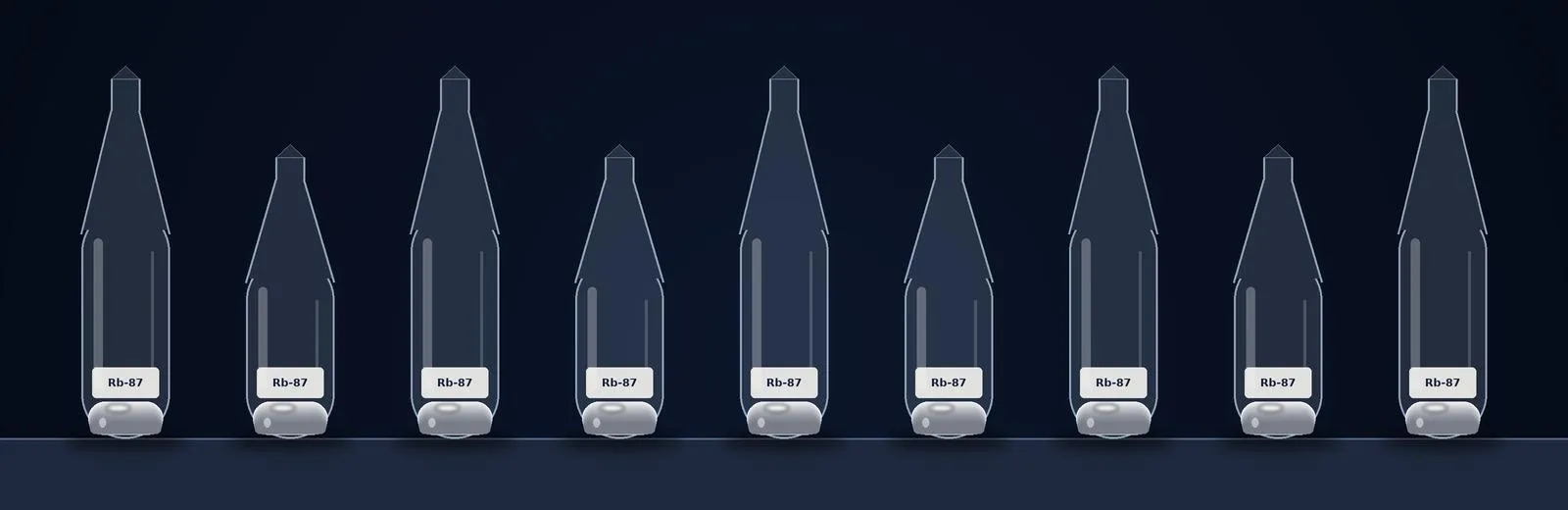
AMT Isotopes supplies enriched Rubidium-87 as chloride (⁸⁷RbCl) and as high-purity metal for atomic clock manufacture, quantum and cold-atom research, geochronology laboratories and analytical standard preparation. Metal is supplied in sealed glass ampoules under argon; chloride is supplied in sealed vials. Every shipment comes with a full certificate of analysis and certificate of origin, and reliable international delivery to research institutions and manufacturers.
Other chemical forms are available on request.
Request a quote for Rb-87 chloride or Rb-87 metal, or explore our full isotope catalog for available forms and quantities.
Frequently Asked Questions About Rubidium-87
Is Rubidium-87 radioactive?
Technically yes, but only just. Rb-87 undergoes beta decay to Strontium-87 with a half-life of approximately 49.7 billion years. The resulting activity is so low that the isotope is handled and classified as effectively stable in normal laboratory use.
What is the difference between Rb-87 and Rb-85?
Rb-85 makes up about 72% of natural rubidium and is genuinely stable. Rb-87 makes up about 28%, is very weakly radioactive, and has the hyperfine transition and collisional properties that make it the isotope of choice for atomic clocks and cold-atom physics.
Why is enriched Rb-87 needed instead of natural rubidium?
Natural rubidium is majority Rb-85, which interferes optically in clock and laser cooling applications and distorts isotope ratio measurements in geochronology. Enrichment to 98% or above cuts Rb-85 from about 72% to under 2%, removing that interference.
What enrichment level is available for Rb-87 chloride and metal?
AMT supplies Rb-87 metal at 98.4% and Rb-87 chloride at 98.5% or higher, with the measured isotopic composition stated on the certificate of analysis.
How should Rb-87 metal be stored and shipped?
In sealed glass ampoules under argon or vacuum, away from moisture and heat. The metal melts at about 39 °C and ignites in air, so ampoules should be opened only in a glovebox or inside the vacuum system they feed. It ships as dangerous goods under UN1423, Class 4.3.
How should Rb-87 chloride be stored?
In a tightly closed container in a dry place. Rubidium chloride is stable in air but mildly hygroscopic, so keeping it dry protects weighing accuracy. It is not classified as dangerous goods for transport.
Why is Rb-87 used in atomic clocks?
Its ground state hyperfine transition at about 6.835 GHz is stable, reproducible and easy to probe optically, allowing compact, rugged and affordable frequency standards for satellites, telecom networks and instrumentation.
Which isotope was used for the first Bose-Einstein condensate?
Rubidium-87. The first BEC was produced in 1995 by cooling a dilute vapour of Rb-87 atoms to within a fraction of a microkelvin of absolute zero.
How does Rb-Sr dating work?
Rb-87 decays to Sr-87 at a known, very slow rate. By measuring the Rb-87/Sr-86 and Sr-87/Sr-86 ratios in several minerals from the same rock, geologists construct an isochron whose slope gives the age of the rock. Enriched Rb-87 spikes are used to measure rubidium concentration precisely by isotope dilution.
When should you choose rubidium chloride over rubidium metal?
Choose the chloride when the rubidium will be dissolved, converted or used as a spike, or when you want material that is easy to weigh, store and ship. Choose the metal when the application needs rubidium vapour, such as vapour cells, clock lamps and cold-atom sources.
Which quantum computers use Rb-87?
Most neutral-atom quantum computers, including the systems built by QuEra, Pasqal and Infleqtion. Each Rb-87 atom is held in an optical tweezer and stores a qubit in its hyperfine ground states. The atoms are loaded from Rb-87 metal.
Is Rb-87 used for GPS-free navigation?
Yes. Atom interferometers using laser-cooled Rb-87 measure acceleration and gravity precisely enough to navigate without satellite signals, and have already been tested at sea.
What is a Rydberg atom RF receiver?
A rubidium vapour cell in which atoms are laser-excited to Rydberg states, making them extremely sensitive to radio-frequency electric fields. It works as a small, self-calibrated, broadband antenna.